Collaborative Divorce or Mediation? How to Tell Which One Fits
Both keep you out of court, and they are not the same thing. The difference comes down to one question: can you speak for yourself at the table?

Conscious Family
Conscious Family Law & Mediation
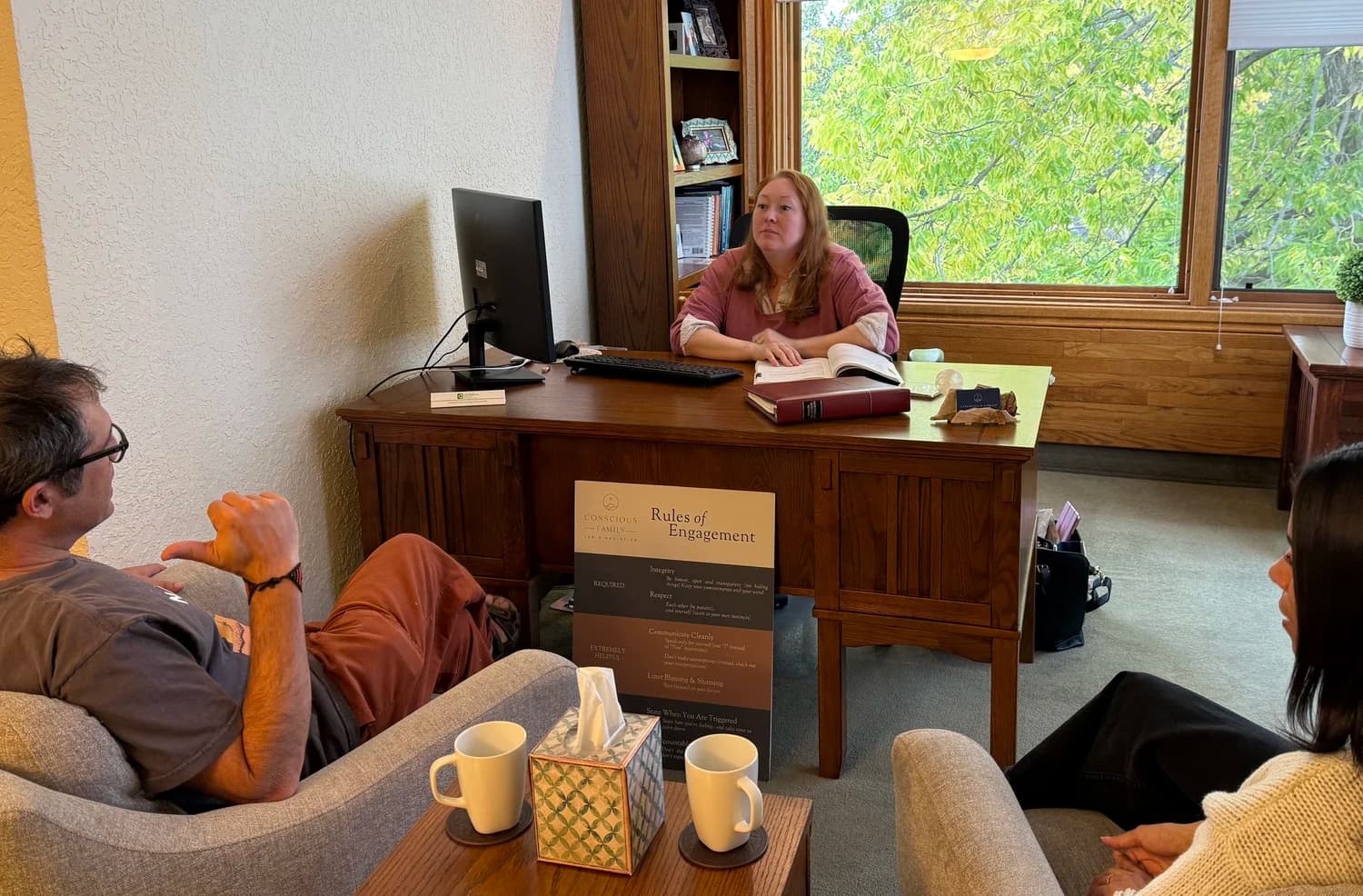
People often use "mediation" and "collaborative divorce" as though they were two names for the same gentle alternative to court. They aren't. They're built differently, they cost differently, and they suit different people.
The structural difference fits in one paragraph. In mediation, one neutral professional works with both spouses. The mediator doesn't represent either of you and doesn't take sides — the two of you do the negotiating. In collaborative divorce, each spouse retains their own specially trained attorney, and everyone — both spouses and both lawyers — signs a written commitment to settle outside of court. You're advised and advocated for throughout; you're just never doing it in front of a judge.
What each one buys you
Mediation involves the fewest professionals, which usually makes it the fastest and least expensive route. The trade-off is that you speak for yourself. You'll have information, structure, and a neutral keeping the process fair, but nobody in the room is exclusively in your corner.
Collaborative divorce puts more people around the table — two attorneys, often a neutral financial specialist and a neutral facilitator — so it costs more than mediation. What you get for it is that you never have to negotiate alone, and you get real-time legal advice as the conversation unfolds rather than afterward.
The question isn't which process is nicer. It's whether you can advocate for yourself in the same room as your spouse.
Signs mediation is the right fit
- You can both hold a difficult conversation without it collapsing — not comfortably, just workably.
- You each have a reasonably clear picture of the finances, and neither of you suspects the other of hiding anything.
- You're motivated by keeping the cost and the timeline under control.
- You're both able to say what you actually want, out loud, to the other person.
Signs collaborative is the better fit
- A real knowledge gap. One of you has managed the money for twenty years and the other genuinely doesn't know what's there. That imbalance is hard for a single neutral to level.
- You shut down in conflict. If your pattern in this relationship has been to concede in order to end the discomfort, mediation can quietly reproduce that pattern in a legal document.
- Complexity worth advising on. A business, equity compensation, a professional practice, significant separate property, or an interstate move — these are places where advice as you go is worth what it costs.
- Your spouse won't engage without their own lawyer. That's common, and it's not unreasonable. Collaborative gives them one without pointing everyone toward a courtroom.
- You want an advocate but not a war. Which is, for a lot of people, the whole point.
The clause that makes collaborative work
The participation agreement contains a provision that surprises people: the collaborative attorneys are contractually barred from representing either spouse in litigation. If the case goes to court, both lawyers withdraw and you start over with new counsel.
It sounds risky. It's actually the engine. It removes "fine — I'll see you in court" from the negotiation entirely, because that threat now costs the person making it as much as the person hearing it. Everyone at the table, professionals included, is pointed at the same outcome.
There's a middle option people miss
You can mediate and still have a lawyer — just not in the room. Plenty of couples work with a mediator and each keep a consulting attorney in the background to answer questions between sessions and review the agreement before signing. It costs meaningfully less than a full collaborative process while closing the "nobody's advising me" gap. For many couples it's the sweet spot, and it's underused because nobody tells them it exists.
You're not locked in
Starting in mediation and discovering it isn't working doesn't waste the effort — the disclosure you've gathered and the issues you've already settled carry over. Movement between processes is normal, and it's better than grinding on in one that has stopped fitting.
The most reliable way to choose is a conversation about your actual circumstances — the finances, the children, the history, and honestly how the two of you handle a hard subject. That's what the free intro call is for: not to sell you a process, but to tell you which one your situation can realistically carry.