Free Clinical Resource for Therapists

Download your free copy

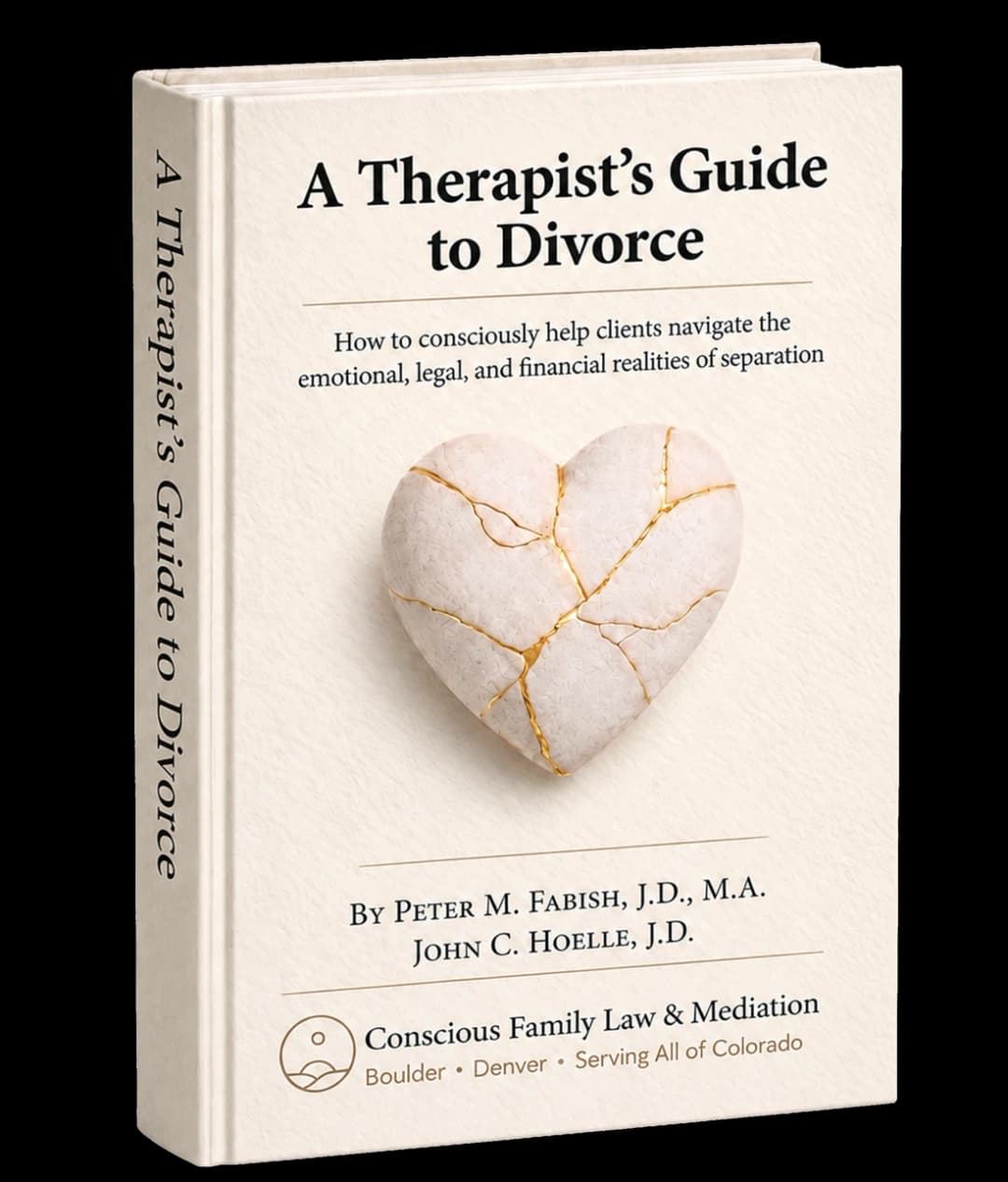
The Conscious Divorce Clinical Guide

What every couples therapist, LMFT, LPC, and LCSW needs to know about guiding clients through Collaborative Uncoupling.

16 Chapters

6 Therapeutic Modalities

10+ Referral Scripts

100% Free

Step-by-Step Guidance

16 Chapters 6 Therapeutic Modalities 10+ Referral Scripts 100% Free Step-by-Step Guidance

Divorce doesn’t stay contained. It follows your clients everywhere—into their grief, their nervous system, their parenting, their finances, and the legal process they don’t understand and often fear. This guide was written by two attorney-mediators—one of whom is a former practicing therapist—to give you what you were never taught: a clear clinical framework, practical legal literacy, and step-by-step guidance to navigate clients through this challenging period.

What You’ll Get

Built around the exact challenges therapists face when clients enter divorce

Protect Your Therapeutic Progress

Understand how adversarial legal processes quietly erode the therapeutic alliance—and how to guide clients toward a structure that protects the work you’ve already done.

Make Confident, Aligned Referrals

Use a values-based checklist to evaluate any mediation firm, plus a clear, step-by-step view of what actually happens when you refer a client into conscious mediation.

Download your free copy

Utilize the Right Modalities at the Right Phase

Access a practical library of approaches—including Discernment Counseling, Therapeutic Separation, Conscious Uncoupling, and Closure Therapy—each mapped to specific phases of the divorce journey.

Meet The Authors

Peter M. Fabish, J.D., M.A.

Peter has sat in both chairs. Before becoming an attorney, he practiced as a psychotherapist — which means he understands the therapeutic relationship at a clinical level, not just a professional one. He co-authored a chapter in The Collaborative Divorce Advantage and served as President of the Boulder Interdisciplinary Committee.

John C. Hoelle, J.D.

John is a Colorado attorney-mediator, author of Heal As You Go, former documentary film editor, Vedic meditation practitioner, and father. He built CFL after watching the adversarial legal system destroy families who came to him asking for help. Today, he brings a deep conviction that no family should have to choose between a good divorce and a good legal process.

Get the guide.

It’s free.

Enter your name and email below and we'll send you the complete guide instantly. No spam, no sales pressure — just the clinical resource you've been looking for.

Complete 5-part, 100+ page guide

Instant PDF delivery to your inbox

Clinical tools and scripts you can use this week

No obligation — yours to keep, always

Form Block
This form needs a storage option. Double-click here to edit this form, and tell us where to save form submissions in the Storage tab. Learn more

What’s Inside

Five parts. Sixteen chapters. Everything you were never taught about divorce — in the language of your profession.

  • The clinical case for divorce literacy, why process choice is the most important variable, and what you need to know about Colorado family law — without practicing it.

  • Full divorce-specific assessment framework, attachment theory in divorce, grief and ambiguous loss, and Polyvagal Theory applied to the stressed divorcing client.

  • Discernment Counseling for mixed-agenda couples, six sequenced clinical modalities from pre-decision through post-divorce closure, and working with children in divorcing families.

  • The Conscious Divorce Clinical Collaboration Framework, ten clinical scripts, and the values-aligned referral checklist for evaluating any legal professional.

  • Identity reconstruction, post-traumatic growth, special populations (gray divorce, LGBTQ+, neurodivergent, DV), and a self-care model built specifically for therapists in this work.

In 2021, John and Peter made a commitment: every family they serve will move through a process built on values, not positions — one that protects children, honors dignity, and never, under any circumstances, puts the therapeutic relationship at risk. This guide is the invitation to build that process together.