Making Peace with Your Mortgage: Property Valuation in Mediation
When couples choose mediation to navigate their separation, they're already demonstrating a commitment to conscious decision-making and collaborative problem-solving. Yet even in the most amicable…

Conscious Family
Conscious Family Law & Mediation
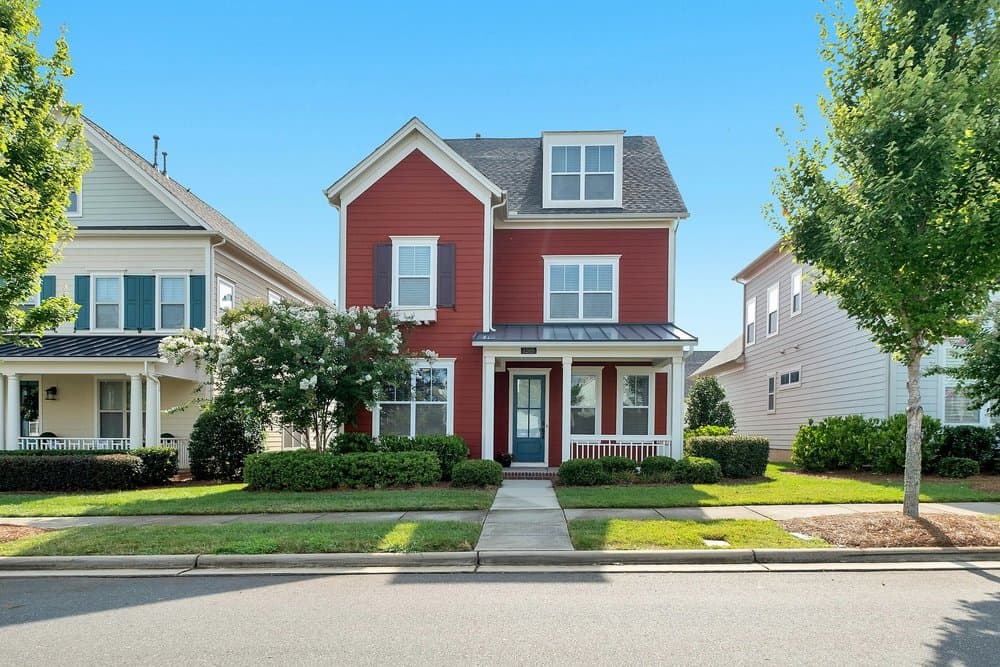
When couples choose mediation to navigate their separation, they're already demonstrating a commitment to conscious decision-making and collaborative problem-solving. Yet even in the most amicable mediations, the family home—often the most significant marital asset—can become a source of confusion and potential conflict if property valuation isn't handled with appropriate care and expertise.
Understanding how to accurately value real property isn't just a technical detail; it's foundational to creating settlement agreements that are both equitable today and executable tomorrow.
The Challenge of Valuing Real Estate in Divorce
In our mediation practice, we frequently encounter couples who arrive with informal property valuations—perhaps a tax assessment, an online estimate (e.g., Zillow), or a well-intentioned opinion from a friend in real estate. While these starting points reflect a desire to move forward efficiently, they often create complications that can derail otherwise thoughtful settlement agreements. A mediated agreement built on an informal valuation may look fair on paper, and yet prove unworkable when one spouse attempts to refinance or secure mortgage financing to buy out the other's interest.
Formal Appraisals—The Gold Standard
A formal appraisal, conducted by a credentialed appraiser who adheres to Uniform Standards of Professional Appraisal Practice (USPAP), provides the objectivity and defensibility that mediated settlements require. This isn't about distrust between spouses—it's about creating a shared foundation of accurate information upon which both parties can make truly informed decisions.
The formal appraisal process involves comprehensive inspection, applies accepted valuation methodologies, and produces a detailed written report that can withstand scrutiny should questions arise later. In mediation, where both parties are working together toward mutual agreement, this shared objective data point becomes a powerful tool for constructive dialogue rather than positional bargaining.
The Comparative Market Analysis Option
Starting with a Comparative Market Analysis (CMA) can be useful in certain circumstances. Prepared by a licensed real estate agent or broker, a CMA provides a current snapshot of market conditions by comparing your home with recently sold properties in your area. For couples who are planning to sell the home, or who don’t need to refinance to get one person off the mortgage, or when both parties have a high degree of trust and simply need a reasonable starting point for discussion, a CMA can facilitate early conversations without the upfront cost of a formal appraisal.
It’s important to know that the methodology here, unlike with formal appraisals, is subject to the agent's discretion, and potential bias may arise depending on the agent's relationship with either party. More critically, if your mediated agreement contemplates refinancing—where one spouse will buy out the other's interest—a CMA won't satisfy lender requirements and may create a significant gap between the value you've agreed upon and the value the lender will accept.
The Lender's Perspective
Unexpected turbulence can arise between the appraisal you obtain for settlement purposes and the appraisal your lender will require for financing.
When one spouse plans to keep the home and refinance to remove the other from the mortgage, lenders mandate their own independent appraisal to ensure compliance with federal regulations. These two valuations—yours and the lender's—may not align. If your mediated settlement agreement is predicated on a value the lender doesn't accept, you're facing potential post-agreement disputes that neither party anticipated.
This is where conscious mediation practice diverges from simply "reaching agreement." We're not just facilitating a conversation—we're helping parties craft agreements that can actually be implemented in the real world.
Our Collaborative Approach: Working with CDLPs
This is precisely why we frequently collaborate with Certified Divorce Lending Professionals (CDLPs) in our mediation work. These specialists possess expertise at the intersection of divorce, real estate, and mortgage underwriting—a unique combination that traditional legal teams or general lenders often lack.
Before couples finalize their agreement about who keeps the home, a CDLP can conduct an early-stage analysis to determine whether the proposed arrangement is actually achievable under current lending guidelines and the parties' financial profiles. This prevents the heartbreak of reaching agreement only to discover months later that the refinance isn't possible.
CDLPs can also help us draft settlement language that contemplates potential appraisal variances—an essential safeguard that keeps agreements actionable even if the lender's appraisal differs from earlier valuations. This both/and approach acknowledges the complexity of real-world finance while maintaining the integrity of the mediated agreement.
CDLPs also understand the unique documentation and continuity requirements for alimony and child support as qualifying income in mortgage underwriting. Their involvement helps us structure support provisions that not only meet the receiving spouse's needs but also satisfy underwriting requirements—avoiding misguided assumptions about loan eligibility that could undermine the entire settlement.
Perhaps most importantly, CDLPs provide invaluable insight into the complete financial picture of home retention. With their comprehensive approach, we can help clients understand whether keeping the home is fiscally prudent relative to alternative property distributions. Sometimes the most conscious choice is recognizing that selling the home and moving forward separately creates more financial stability for both parties than struggling to maintain a property that stretches resources too thin.
Our collaborative approach minimizes the risk of settlement breakdowns and future conflicts arising from ambiguous or impractical terms.
Support for Conscious Decision-Making
If you're navigating separation that involves real estate, mediation allows for many creative resolutions that a judge can’t order from the bench. But the goal isn't simply to reach agreement—it's to craft settlements that are not only just today but also sustainable tomorrow.
Accurate property valuation isn't an obstacle to settlement—it's the foundation upon which sustainable agreements are built. And by bringing in outside expertise like a CDLP into the mediation process early, we create space for you and your spouse to make fully informed decisions about your housing future. You're not just dividing an asset; you're each forging a path toward financial stability and independence.